
US Secretary of State Marco Rubio says relations between India and the US have not lost momentum and are set to strengthen, with hopes for a trade deal soon.
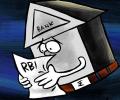
Indian banks are urging the Reserve Bank of India (RBI) to reconsider its new $100 million cap on net open foreign-exchange positions, warning that the directive could lead to significant mark-to-market (MTM) losses and force an accelerated unwinding of trades, potentially impacting FY26 earnings.

Indian stock market benchmark indices closed higher, driven by strong performance in blue-chip bank shares and a positive trend in global markets, with hopes of progress in US-Iran peace negotiations also contributing to optimism.
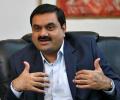
The U.S. Department of Justice has permanently dropped all criminal charges against Indian tycoon Gautam Adani and his nephew Sagar, bringing a high-profile securities and wire fraud case in New York to a close after prosecutors concluded they could not sustain the allegations.

Russian President Vladimir Putin is set to visit China for talks with Chinese leader Xi Jinping, shortly after US President Donald Trump's visit to Beijing. The visit underscores the close strategic ties between China and Russia amid global tensions.

The Enforcement Directorate conducted searches against Punjab industries minister Sanjeev Arora and others allegedly linked to him as part of a money laundering case investigation.

Reserve Bank of India (RBI) Governor Sanjay Malhotra stated that preventing second-round effects of supply shocks, where inflation expectations rise due to prolonged disruptions, is the primary role of monetary policy. He also defended the RBI's foreign exchange market interventions, asserting it did not commit to an 'indefensible peg'.

US Secretary of State Marco Rubio will visit India for four days to strengthen bilateral relations, holding talks with Indian leaders and attending the Quad foreign ministers' meeting.

Indian equity benchmark indices, Sensex and Nifty, ended marginally lower in a volatile trading session, surrendering early gains due to profit-taking in blue-chip stocks and persistent macroeconomic concerns, despite positive global cues.

The Indian rupee depreciated by 32 paise to close at 92.83 against the US dollar, influenced by escalating global tensions, particularly the US-Iran conflict, and the deadline for the RBI's instructions to banks to curb overnight positions.

Indian benchmark equity indices, Sensex and Nifty, opened higher, tracking positive global trends and easing crude oil prices, fueled by hopes of a swift resolution to the West Asia conflict. Track Nifty 50 and BSE Sensex performance and key global triggers.

The Indian rupee weakened against the US dollar due to geopolitical tensions surrounding the Strait of Hormuz and ahead of the Reserve Bank of India's monetary policy review.

The Indian rupee depreciated by 28 paise to settle at 93.44 against the US dollar, influenced by ongoing uncertainties surrounding West Asia peace negotiations, volatile crude oil prices, and the Reserve Bank of India's recent adjustments to non-deliverable forward market regulations.

Indian benchmark equity indices, Sensex and Nifty, surged over 1 per cent, driven by a significant correction in crude oil prices and a global market rally, fueled by improving sentiment surrounding potential US-Iran negotiations.

Indian benchmark indices Sensex and Nifty closed lower, snapping a two-day rally, as a spike in crude oil prices, triggered by reports of fresh US military operations in southern Iran, dampened investor sentiment and reignited fears of renewed energy supply disruptions.

Gurugram Police have arrested three Nigerian nationals for allegedly defrauding people through social media platforms by posing as women. The police recovered mobile phones, a laptop, and SIM cards from the accused, who are also charged under the Passport Act and the Foreigners Act.

The gems and jewellery industry anticipates challenging times following the government's decision to increase gold import duty to 15 per cent, a move that exporters warn could fuel the grey market and heighten smuggling risks.

India's foreign exchange reserves decreased by USD 11.413 billion to USD 698.346 billion during the week ending March 20, primarily due to a significant reduction in gold reserves, according to the Reserve Bank of India (RBI).

Chinese President Xi Jinping has arrived in Pyongyang for his first official visit in seven years, meeting with North Korean leader Kim Jong-un to reaffirm their long-standing friendship and pledge further development of bilateral relations amidst Pyongyang's deepening military ties with Moscow and China's assertions against Japan's 'new militarism'.

'...especially pressure on the rupee, the current account deficit, and foreign exchange outflows.' 'The key question over the next several months is whether the government can prevent external turbulence from feeding into domestic economic pessimism.'

The Enforcement Directorate (ED) has arrested Punjab Industries Minister Sanjeev Arora in connection with a money laundering case involving alleged fake GST purchases and round-tripping of funds. Raids were conducted at multiple locations, and Arora was taken into custody under the Prevention of Money Laundering Act (PMLA). This follows previous actions against Arora and other politically connected individuals in Punjab.

Petrol and diesel prices in India have been increased for the second time in a week, following a long freeze on revisions. The increase comes as global crude prices surge and state-run oil firms look to recoup losses.

A source familiar with US Treasury Secretary Scott Bessent's thinking revealed on Saturday that the department "intends to utilise all available authorities to make Iranian assets accessible for rebuilding and repair efforts related to any future damage inflicted by Iran."

The Indian rupee depreciated significantly against the US dollar, reaching a new all-time low due to rising oil prices, a strong dollar, and ongoing geopolitical concerns. Domestic equity market declines and foreign investment outflows further contributed to the rupee's weakness.
The Enforcement Directorate conducted fresh searches against Punjab industries minister Sanjeev Arora and others allegedly linked to him as part of a money laundering investigation. Raids were carried out at multiple locations, including Arora's residence and business premises, following a new case registered under the Prevention of Money Laundering Act (PMLA).

The Enforcement Directorate (ED) has attached assets worth over 581 crore belonging to Reliance Home Finance Limited (RHFL) and Reliance Commercial Finance Limited (RCFL), companies of Reliance Group Chairman Anil Ambani, as part of an ongoing investigation.
India's foreign exchange reserves decreased by USD 7.052 billion to USD 709.759 billion in the week ending March 13, according to the Reserve Bank of India (RBI). This decline follows a previous drop and comes after reserves reached an all-time high in February.

'You have seen the retrenchments by big corporates in the IT industry because they are not getting enough offers.' 'MSMEs in the manufacturing sector are really struggling. They do not know what to do. They are not able to predict what will happen tomorrow.'

Petrol and diesel prices in India have seen their fourth increase in less than two weeks, pushing cumulative hikes to nearly Rs 7.5 per litre since May 15, reaching their highest levels since May 2022. This surge, driven by global crude oil costs and the Iran conflict, is expected to exacerbate inflationary pressures and raise transportation costs across the economy.

The Reserve Bank of India (RBI) has granted approval for UAE-based Emirates NBD (ENBD) PJSC to acquire up to a 74 per cent stake in RBL Bank for $3 billion, marking the largest foreign investment ever in a domestic Indian bank.
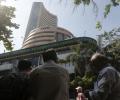
The BSE benchmark traded 44.43 points up at 76,521.93, and the Nifty quoted 17.20 points higher at 24,048.85. Track Stock markets on May 26.

Indian benchmark equity indices, Sensex and Nifty, rebounded on Wednesday, recovering intraday losses, primarily driven by strong fag-end buying and a significant rally in blue-chip Reliance Industries.

Indian benchmark indices Sensex and Nifty climbed in early trade, driven by a significant drop in crude oil prices following reports of a potential 60-day ceasefire extension between the US and Iran, coupled with positive global market trends and buying in IT stocks.

Iranian Foreign Minister Seyed Abbas Araghchi spoke with Indian counterpart S Jaishankar to discuss the West Asia crisis, following discussions with Russian President Vladimir Putin.
India's forex reserves dropped by $11.683 billion to $716.810 billion during the week ended March 6, the RBI said on Friday.

The escalating crisis in West Asia and its impact on the global energy supply chain are expected to dominate deliberations at a two-day meeting of BRICS foreign ministers to be hosted by India.

Pakistan's skewed foreign reserves got a major boost after Saudi Arabia pledged an additional $3 billion in deposits while extending its existing $5 billion facility for a further three years.

The Reserve Bank of India (RBI) Governor Sanjay Malhotra is now confronting the classic growth-inflation tradeoff, a situation exacerbated by the West Asia war, which threatens to end the 'goldilocks period' of low inflation and robust growth.
Forex reserves include a country's gold holdings and convertible foreign currencies held in its banks, including special drawing rights and exchange reserve balances, with the International Monetary Fund.
The World Bank has affirmed India's strong position to withstand the current global energy shock, citing high foreign exchange reserves, fiscal space, and low inflation as key buffers supporting continued growth despite international headwinds.
